The Camino and the area

Between Palas de Rei and Melide.

Porto de Bois is a small hamlet in the parish of O Mato, Palas de Rei, in the A Ulloa district of Galicia. The Camino Francés passes 160 metres from our door, on the stretch where the province of Lugo gives way to A Coruña. Here is what surrounds this stage: what you'll see on foot and what's worth a short detour.

The stage, village by village

Order of places on the Camino Francés, east to west.

  1. Palas de Rei
  2. San Xulián do Camiño
  3. Pontecampañaafter crossing the river Pambre
  4. Casanovathe last village in the province of Lugo
  5. Porto de BoisAs Casiñas, 160 m from the Camino
  6. O Cotothe first in the province of A Coruña
  7. Leboreiro
  8. Furelos
  9. Melidewhere the Camino Primitivo joins

History

A battle, a castle and the knights of Santiago.

In 1371, in the meadows of Porto de Bois, the last battle of the first Fernandine War was fought: the Galician nobles loyal to Peter I and allied with Portugal, led by Fernando de Castro, were defeated by the troops of Henry II. Our apartments take their names from that story.

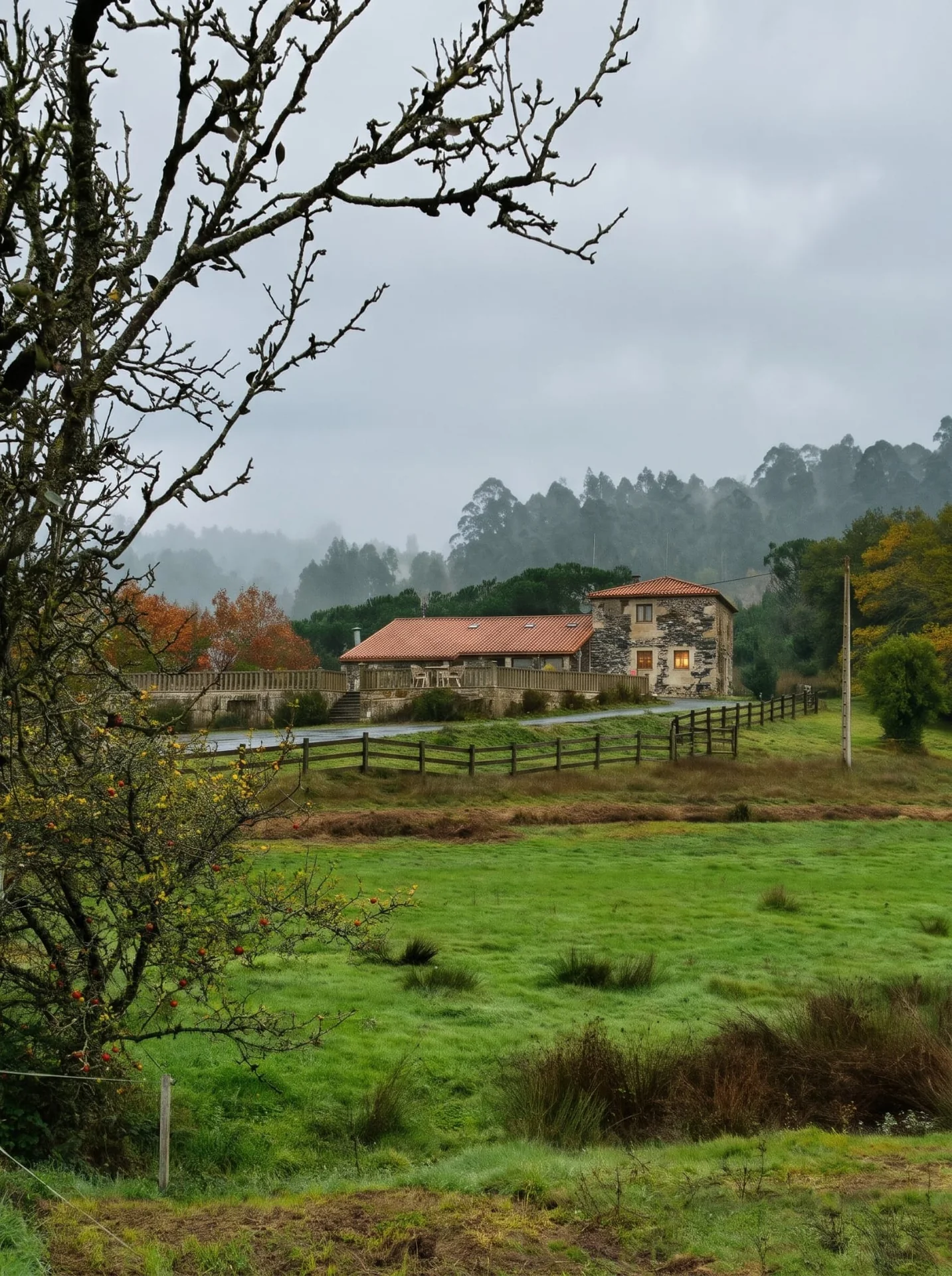
Meadows and stone houses of Porto de Bois under an autumn sky
01

Pambre Castle

Built around 1375 by Gonzalo Ozores de Ulloa on a rock above the river Pambre, a few kilometres south of the Camino. A square plan, a central keep and four corner towers. It was one of the few major Galician fortresses to survive the Irmandiño revolt (1467–1469). Today it belongs to the Xunta de Galicia, which restored it.

02

Vilar de Donas

The 12th-century church of San Salvador, a landmark of Galician Romanesque with early Gothic touches. It was linked to the Order of Santiago, whose knights were buried here, and its 14th- and 15th-century murals are among the best preserved in Galicia. Protected since 1931, it lies a little off the Camino, near Palas de Rei.

03

Castro de Castromaior

An Iron Age hillfort (5th century BC to 1st century AD) covering more than five hectares with up to six enclosures, right by the Camino between Portomarín and Palas de Rei. Many pilgrims pass it the day before reaching Porto de Bois.

Further along

Stone bridges and villages with legends.

Leaving Porto de Bois, the Camino climbs towards O Coto, already in the province of A Coruña, and carries on through meadows and stone hamlets to Melide.

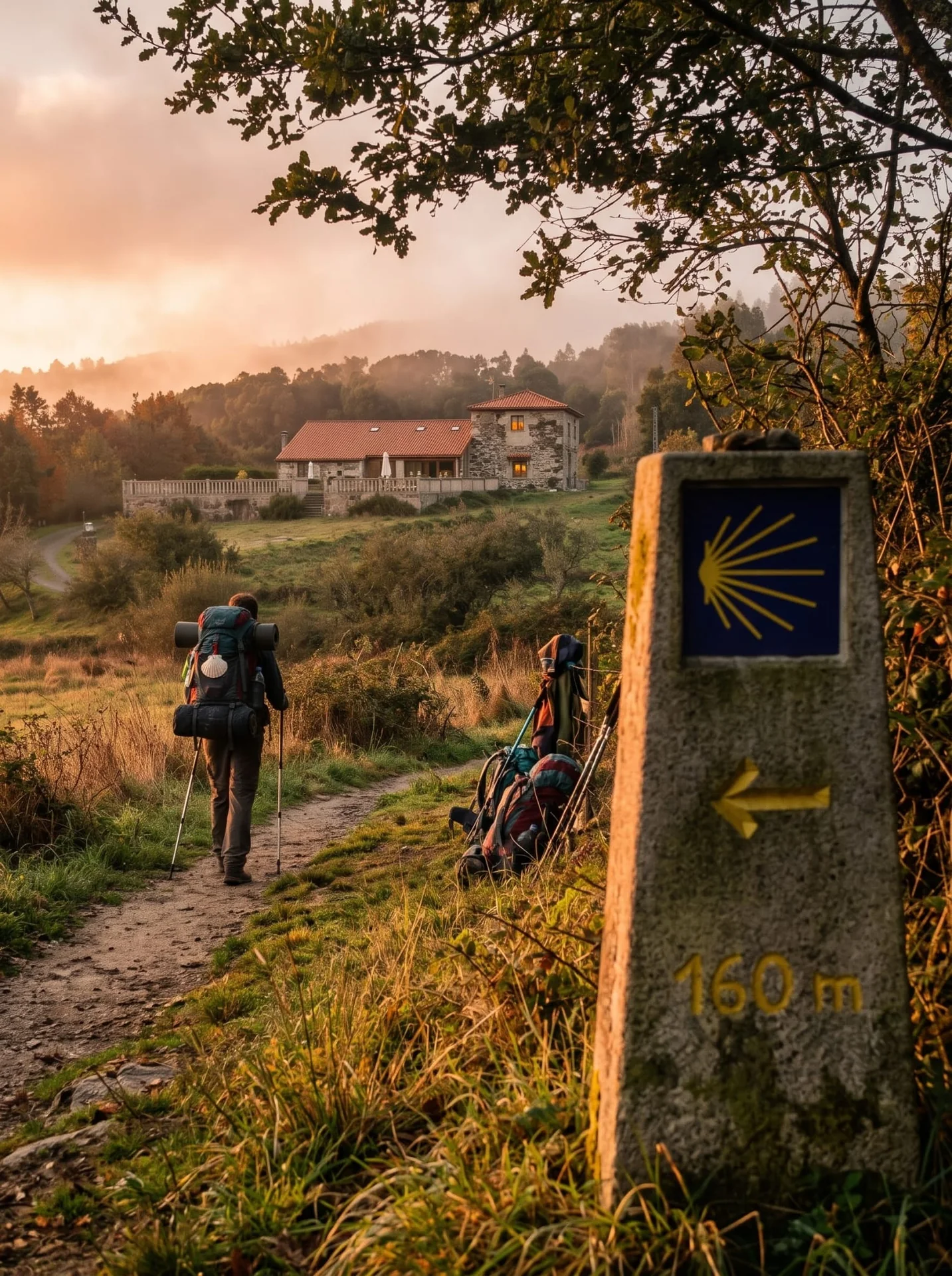
Pilgrims by the Camino waymarker 160 metres from As Casiñas
01

Leboreiro

A medieval hamlet with the 13th-century church of Santa María and a 14th-century bridge over the río Seco. Legend says a spring that glowed at night appeared by the church; an image of the Virgin found there kept returning to the water until an artist carved it into the doorway's tympanum. A pilgrim hospital stood here as early as the 12th century.

02

Furelos

Its four-arched medieval bridge over the river Furelos is one of the best-known sights of this stretch, just before Melide.

03

Melide

A great crossroads: in the Plaza del Convento, pilgrims on the Camino Francés meet those arriving on the Camino Primitivo. The town keeps the Romanesque church of Santa María (12th century) and a 14th-century stone cross considered the oldest in Galicia.

Local flavours

Octopus, cheese and melindres.

This is inland country, a land of fairs and markets, and you can taste it.

01

Pulpo á feira

Melide is famous for its pulpo á feira: boiled octopus served with olive oil, salt and paprika. For many pilgrims it's an essential stop.

02

Arzúa-Ulloa cheese

A soft cow's-milk cheese with Protected Designation of Origin. Palas de Rei and Melide are both within its production area.

03

Melindres of Melide

Melide's best-known sweet: a ring-shaped pastry made with wheat flour, butter, egg and sugar. The town's baking tradition began in family kitchens and is kept alive today by family-run bakeries.

Curiosities

The king's palace and the town of honey.

Tradition explains the name Palas de Rei as «Pallatium Regis», the palace of the Visigothic king Witiza, said to have lived here in the early 8th century.

For Melide, scholars suggest the most likely origin is the Latin name Mellitus, «sweet as honey». A happy coincidence for the town of melindres.

For pilgrims

The essentials that never go out of date.

Rest halfway through the stage.

Four little stone houses 160 metres from the Camino, each with its own kitchen, plus breakfast and laundry.

Sources